
Powhatan Projected Versus Actual Release
A future date is a calculation. It can show when a sentence is expected to reach its release point under facts known at that time. The actual release is the custody event recorded after the agency completes its checks and the person leaves that custody. Virginia Department of Corrections calls the public locator field a “release date,” not a “guaranteed” or “tentative” release date. When the displayed value lies in the future, it should still be read as subject to change.
A Pamunkey detainee awaiting trial usually has no sentence-based date to calculate. Release may depend on bond, dismissal, a plea or sentence, and clearance of other warrants or holds. A court can order release, but the order does not prove the exact hour Pamunkey processed the exit. For a sentenced local prisoner, the jail and court compute and document the local term. For a state-responsible prisoner, VADOC's time computation and release record control.
Transfers require the same care. Leaving Pamunkey for State Farm Correctional Center, State Farm Work Center, another jail, federal custody, or an immigration hold is not community release. Follow the receiving agency before concluding the person is out.
Find a Powhatan County Release Date
The first question is who holds the person. Pamunkey Regional Jail is the principal local jail for a Powhatan arrest. Its public Who's In Jail roster shows current custody and does not publish a release-date field or a historical release archive. VADOC's statewide locator applies when a sentence or transfer places the person under state authority, including state custody or supervision.
- Check the current Pamunkey roster to identify the booking, inmate number, arresting agency, booking date, and case.
- Read the Powhatan court case and final order. Determine whether the person is pretrial, serving a local term, or sentenced to state responsibility.
- For a local term, call Pamunkey Booking/Release at 804-365-6400 extension 3043 and ask for the computed date tied to that booking. Request the jail record if needed.
- For a state-responsible term, search VADOC by the seven-digit DOC ID or by the required name fields, then record the field label and value exactly as shown.
- Compare the date with the sentencing order, jail-credit information, and any notice of a new sentence, hold, or recalculation.
- After the event, obtain the release entry or release documents rather than relying on an old screen capture.
For a broader custody-chain search, use the Powhatan County released inmates lookup. It separates local custody, court disposition, VADOC custody, supervision, and the federal or immigration routes. That distinction prevents a current-roster absence from being mistaken for release.
The VADOC Inmate and Supervisee Locator is the official state search for location and release-date information.
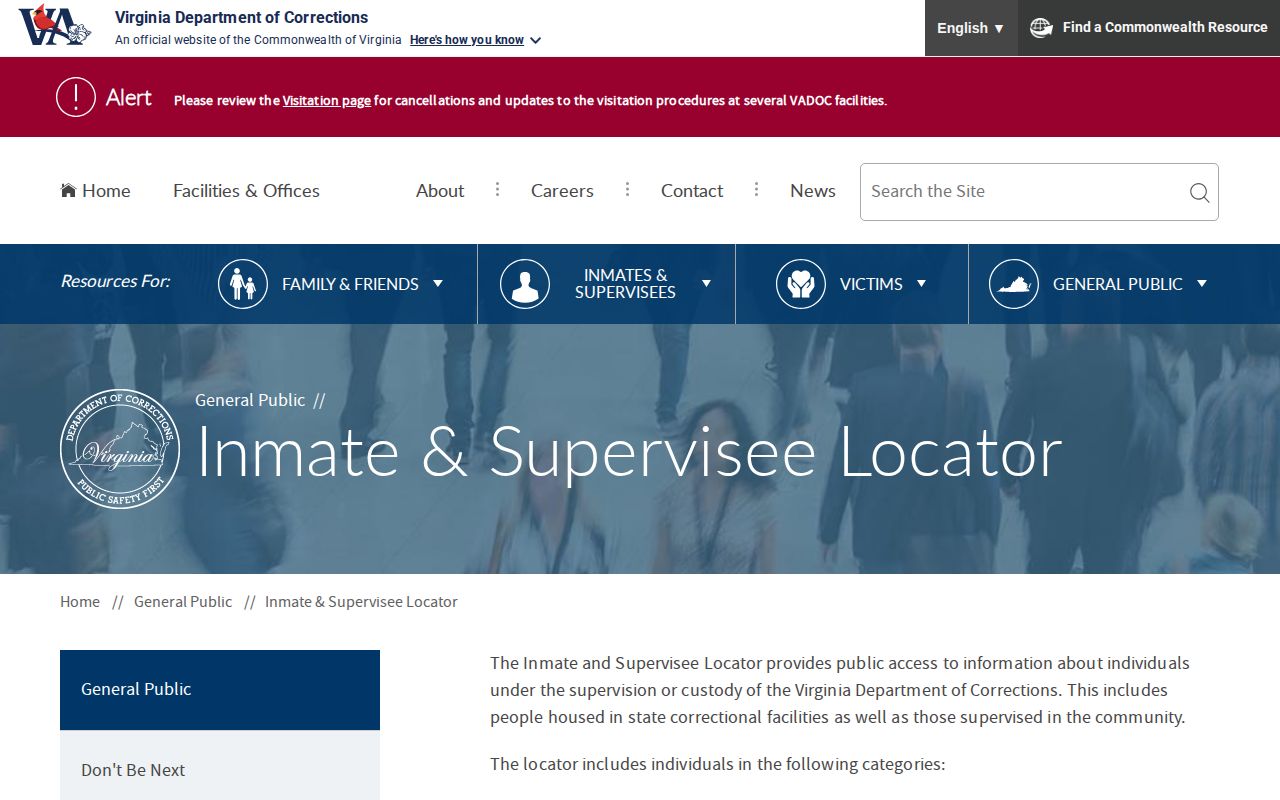
The locator is appropriate only after the record points to VADOC authority; it is not a substitute for Pamunkey's local booking and release record.
VADOC Powhatan Release Search Fields
The VADOC search accepts either the seven-digit DOC ID or a name. A name search requires at least the first three letters of the first name and the complete last name. Optional filters include location, race, gender, and age range. The user also accepts the locator disclaimer and completes the interactive verification. The agency says the system is updated daily while warning that information may be inaccurate or out of date.
| Search item | How to use it |
|---|---|
| Seven-digit DOC ID | Preferred identifier for separating people with similar names. |
| First name | Enter at least the first three letters when searching without a DOC ID. |
| Last name | Enter the complete last name for a name-based query. |
| Optional filters | Use location, race, gender, or age range only to narrow a set of plausible matches. |
| Release date | Copy the live label and value exactly. A future value can change before actual release. |
| Custody or supervision | Shows whether the person remains in VADOC custody or is in the locator's supervisee scope. |
The locator covers people under VADOC custody or supervision, including VADOC-authority people held in a local or regional jail and in a Community Corrections Alternative Program. It is not a permanent archive for every fully inactive person. When no result appears for an older state case, submit a focused VADOC records request rather than declaring that no record exists.
Note: Record the DOC ID and exact field label with the date checked, since a name-only match and an unlabeled date are easy to misread.
Who Computes Powhatan Release Dates
The calculation authority follows the sentence. VADOC generally computes an active state-responsible term longer than 12 months. A short local sentence stays with the local jail and court computation. That division matters in Powhatan County because the local custodian is the regional Pamunkey jail, while the county also contains two state facilities. A person at State Farm Correctional Center or State Farm Work Center follows the VADOC path, not the Pamunkey path.
Inputs may include the sentencing order, total active term, credit for confinement before final judgment, offense date, concurrent or consecutive sentence structure, earning level, loss or restoration of credits, later sentences, appeals, and other legal changes. Virginia Code § 53.1-187 addresses credit for confinement before final judgment. The time-computation sheet and release order provide stronger proof than subtracting days from an arrest date.
- Active term
- The part of the sentence ordered to be served in custody.
- Jail credit
- Qualifying confinement credited toward the active term.
- Concurrent terms
- Sentences that run at the same time as directed by the court.
- Consecutive terms
- Sentences that run one after another and extend the total active time.
- Earned sentence credit
- A statutory deduction earned under the applicable rules, subject to eligibility and classification.
A parole-eligibility date is also different from a release date. Eligibility means the Board may consider release for a sentence still governed by parole law. It is not a promise of a grant, and a grant decision is not the moment the facility completes physical release.
Virginia Credits Affect Powhatan Releases
Virginia uses different credit frameworks based on the offense and sentence. The older good-conduct allowance system generally applies to felony offenses committed before January 1, 1995 and misdemeanor offenses before July 1, 2008, with sentence-specific rules. VADOC says the older classes can range from no allowance to 30 days of allowance for each 30 days served. Parole eligibility can also exist in an older case, so the eligibility date and sentence release date must be kept separate.
For felony offenses committed on or after January 1, 1995, Code § 53.1-202.2 defines earned sentence credit as a one-day deduction earned through the statutory rules and program compliance. Code § 53.1-202.3 sets the rates. Enumerated offenses are capped at 4.5 credit days for each 30 days served. Other eligible offenses use levels of 15, 7.5, 3.5, or zero days deducted for each 30 days served, subject to statutory requirements and exclusions.
The familiar “85 percent” phrase is shorthand. It is not the exact result of the capped rate. Thirty days served plus 4.5 credited days yields about 86.96 percent served under continuous maximum earning. An eligible person at the enhanced 15-per-30 level could have a theoretical two-thirds served ratio, but classification, eligibility, exclusions, and forfeiture can change that outcome. Neither ratio should be used as a promise.
Virginia largely ended discretionary parole for felonies committed on or after January 1, 1995, subject to statutory exceptions. Earned credits also do not reduce the period that must pass before parole eligibility in a case where parole still applies.
Powhatan's 85 Percent Math
Powhatan County release-date math cannot be reduced to one percentage. First decide whether the local or state authority computes the term. Then identify the offense date and the credit statute. VADOC generally handles active state-responsible terms over 12 months, while Pamunkey and the sentencing court retain the local route for a short term. Applying a state-prison estimate to a local jail sentence can produce the wrong date even before credits are considered.
For an enumerated state offense, the maximum 4.5 days credited for each 30 served explains the rough truth-in-sentencing phrase, but the exact continuous-earning fraction is about 86.96 percent. That figure assumes the highest permitted rate continues and no later event changes the term. It does not account for a different earning level, an excluded offense, a credit loss, an added sentence, or a corrected court order. The agency's own calculation remains controlling.
The official VADOC Time Computation page explains which authority calculates the term and why the sentence documents matter.
This local-versus-state split is the key to reading a Powhatan date without turning an estimate into an unsupported release claim.
Why Powhatan Release Dates Change
A future release date reflects the record then available. A later certificate of jail credit, corrected order, new case, or changed credit status can move it. A detainer may not always change the end of one sentence, but it can change what happens at the door by sending the person to another authority instead of the community.
| Factor | Possible effect |
|---|---|
| Corrected court order | Changes the active term, sentence structure, or other inputs used in the computation. |
| Jail-credit certification | Adds or corrects qualifying time served before final judgment. |
| New consecutive sentence | Adds active time that begins after another term. |
| Earning-level change | Changes the rate at which an eligible person earns sentence deductions. |
| Discipline and forfeiture | Can remove credits; a lawful restoration can add them back. |
| Appeal or recalculation | Can alter the legal or arithmetic basis for the displayed date. |
| Detainer or hold | May route the person into other custody even when the first term ends. |
| Parole decision | Affects a parole-eligible case, but approval still requires VADOC release processing. |
VADOC's NAAVI materials directly acknowledge this uncertainty: eligible registered victims can receive an advance notice, commonly about 30 days before anticipated release, and another notice if that anticipated date changes. That is useful evidence that a future date is not fixed.
The VADOC notification page distinguishes an anticipated release notice from the later actual-release event.
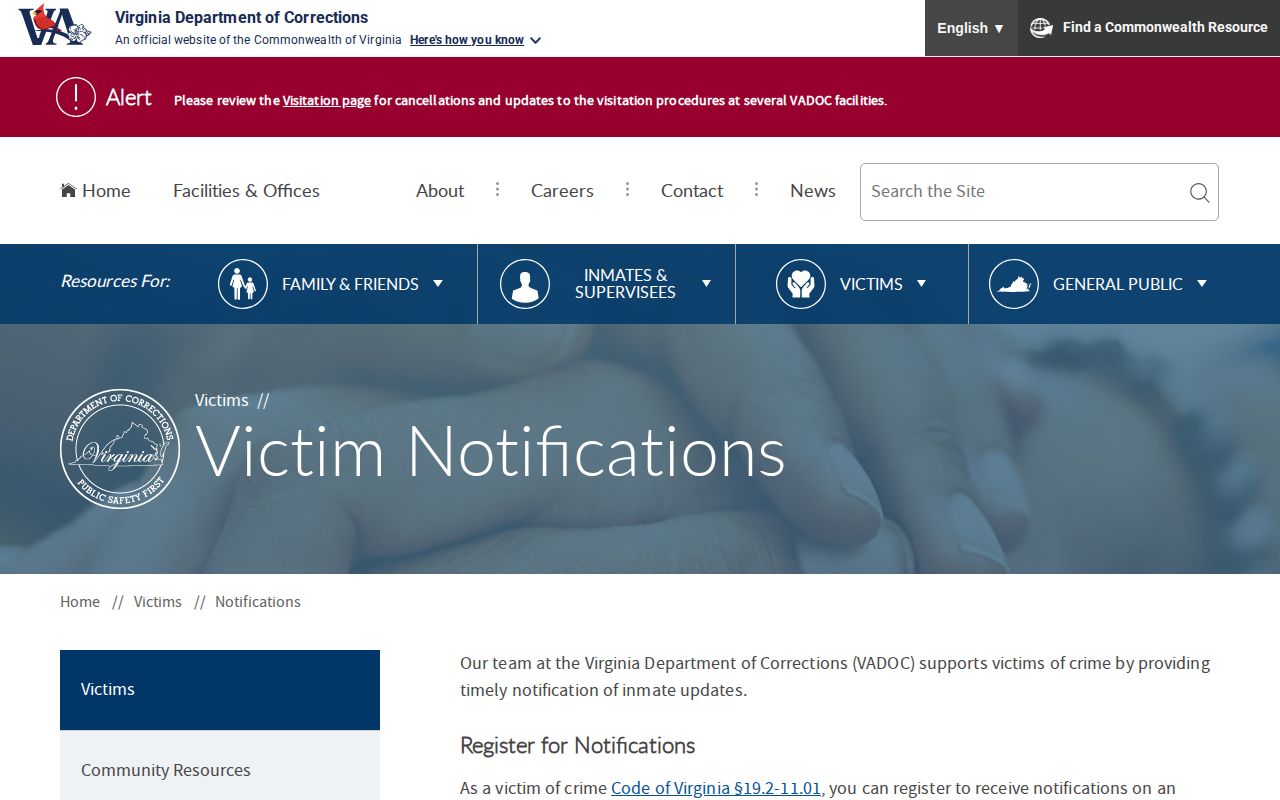
The notice framework reinforces the need to check the final VADOC record after the projected date arrives.
Confirm a Powhatan County Release
For a local sentence, use the Pamunkey directory and ask Booking/Release for the exit event tied to the booking. If a formal record is needed, contact Records at extension 3033 or the PRJ FOIA Administrator. Request the release date and time, release type, and whether the exit was community release or transfer. Pair that response with the Powhatan court sentencing order.
For a state sentence, compare the locator with the time-computation record. At release, VADOC says the person receives a notification-of-release letter and reviews and signs the applicable Order of Release, Conditions of Probation, or Conditions of Parole. Those documents help prove what occurred after a future date disappears from a live interface. An inactive-offender records request is the historical fallback when the person is outside locator scope.
A pending local-custody change can also be followed through the Powhatan County VINELink check. State-prison notices use NAAVI and its eligibility rules, not local Jail VINE. Alerts are useful, but the completed Pamunkey or VADOC record is the final source.
Note: A release date from one authority does not clear unrelated warrants, detainers, transfers, or supervision imposed by another authority.