
No Published Powhatan 72-Hour Releases
No official Pamunkey Regional Jail or Powhatan Sheriff source reviewed publishes a rolling three-day release feed. There is no verified 72-hour URL, window, update cadence, released-person filter, or public retention rule. Pamunkey Regional Jail, known as PRJ, houses people for Powhatan because the county does not operate its own stand-alone jail roster. PRJ’s public tool is titled Who’s In Jail, which signals its present-custody scope.
A three-day search must not turn that current roster into something it is not. Sorting recent booking dates finds recent admissions, not recent exits. A card seen on the roster means the person is currently listed at PRJ. A person who is no longer shown may have left the jail, but the cause might be community release, agency transfer, data correction, or lag. The missing card does not supply a release time or destination.
Request Powhatan Three-Day Release Records
The best 72-hour method is a time-bounded request to the agency that held the person. Choose a precise start and end, including dates and times. Say whether the interval means the prior three calendar days or the rolling 72 hours ending now. Because PRJ serves multiple localities, limit the request to people held for Powhatan or those linked to the Powhatan arresting agency.
- Review the current PRJ roster and record identifiers for any known Powhatan booking, including the inmate ID and booking date.
- Call Booking/Release at 804-365-6400, extension 3043, and give the exact three-day interval.
- Ask whether an existing release log or export covers that range. An agency need not create a new list if no such record exists.
- For each responsive event, request the release time, type, destination, booking number, and Powhatan locality link.
- If a written record is required, contact PRJ Records at extension 3033 or fax 804-365-6413 and make a focused Virginia FOIA request.
- Reconcile each jail event with the appropriate Powhatan court or receiving-agency record before labeling it a community release.
The official PRJ directory identifies the two jail divisions used in this process. The image below documents the contact route, not a list of released people.
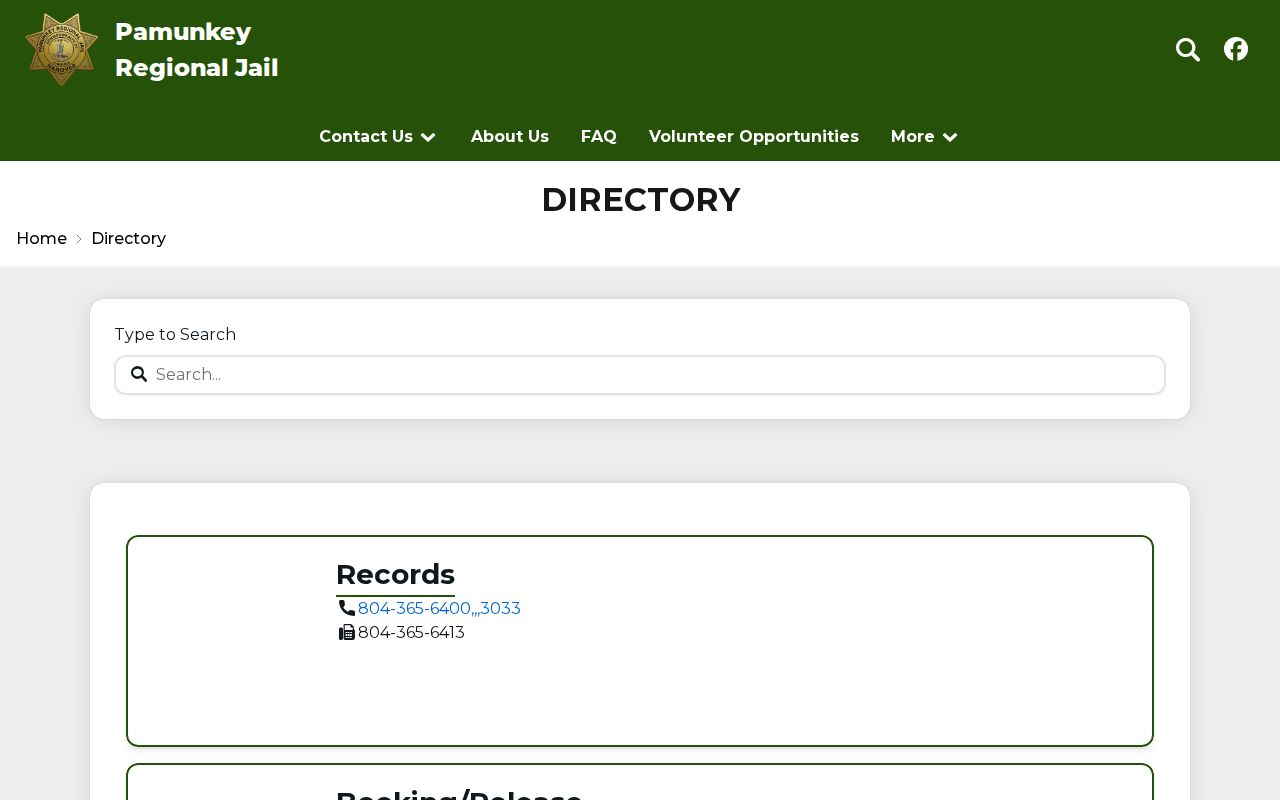
Booking/Release is suited to a recent event question. Records is the documentary route when the answer must be preserved or when a broader existing log is requested.
Powhatan 72-Hour Release Fields
PRJ does not publish a release-field schema online. The following inventory describes what a well-scoped request should seek, based on the documented local custody path. It is a request list, not a promise that every value exists, is stored in that form, or will be released without redaction. Asking for the existing format helps avoid a request that would require PRJ to create a new report.
| Field to request | Why it matters in a 72-hour window |
|---|---|
| Name and aliases | Helps distinguish people across a multi-day list. |
| PRJ inmate or booking number | Connects the exit to one custody episode. |
| Booking date and time | Separates overlapping or repeat bookings. |
| Release date and time | Places the exit within the defined three-day interval. |
| Release type or authority | Shows whether bond, sentence completion, court action, or another basis applied. |
| Destination or transfer notation | Distinguishes community release from continued custody elsewhere. |
| Arresting or committing locality | Filters Powhatan-related events from other PRJ jurisdictions. |
Operational records can use short codes. Ask for the meaning of any release code that is not clear. Do not infer “freedom” from an exit timestamp alone. A transfer closes the PRJ booking while custody continues at the receiving facility.
Note: For one person, a name plus booking number is more precise than asking jail staff to identify every Powhatan-linked event in the full interval.
Powhatan Weekend Release Checks
A 72-hour interval is especially useful when no one checked the roster for a day or two. It can bridge a weekend or holiday and reduce the risk that a short-lived custody change is missed between visits. That practical benefit does not mean PRJ publishes a weekend release schedule. No official source found states a fixed release hour, exit door, family waiting point, holiday timetable, or special three-day posting cycle.
Define the interval with care. A Monday morning request for “the last 72 hours” reaches back to Friday morning, while “Friday through Sunday” describes calendar days and may end at midnight. Those are not the same set of records. Give both boundaries and the time zone. If the aim is a single court-ordered event, name the person and booking instead of relying on a broad date window.
Processing and publication can also differ. A judge may enter a bond or release order before PRJ completes other checks. An unrelated hold can delay departure, and a transfer may occur after the local court event. The court file explains legal authority but usually does not prove the exact time of physical exit. The PRJ record supplies that custody event.
A same-day question is narrower and may be handled through the Powhatan County 24-hour release check. Use the three-day route when the time span, not merely today’s activity, is the real issue.
Reading Powhatan Release Roster Gaps
The public PRJ booking card contains useful identifiers. Documented fields include a name, booking photograph, inmate ID, age, race, sex, arresting agency, booking date and time, charges, a displayed monetary amount, and scheduled court details when populated. None of those fields is a published release date, release reason, or destination. No official source states how long a departed person remains visible.
The official current-custody page is captured below. It can help identify which booking to ask about during a 72-hour inquiry, while its current-tense design shows why it cannot serve as a three-day released-person archive.
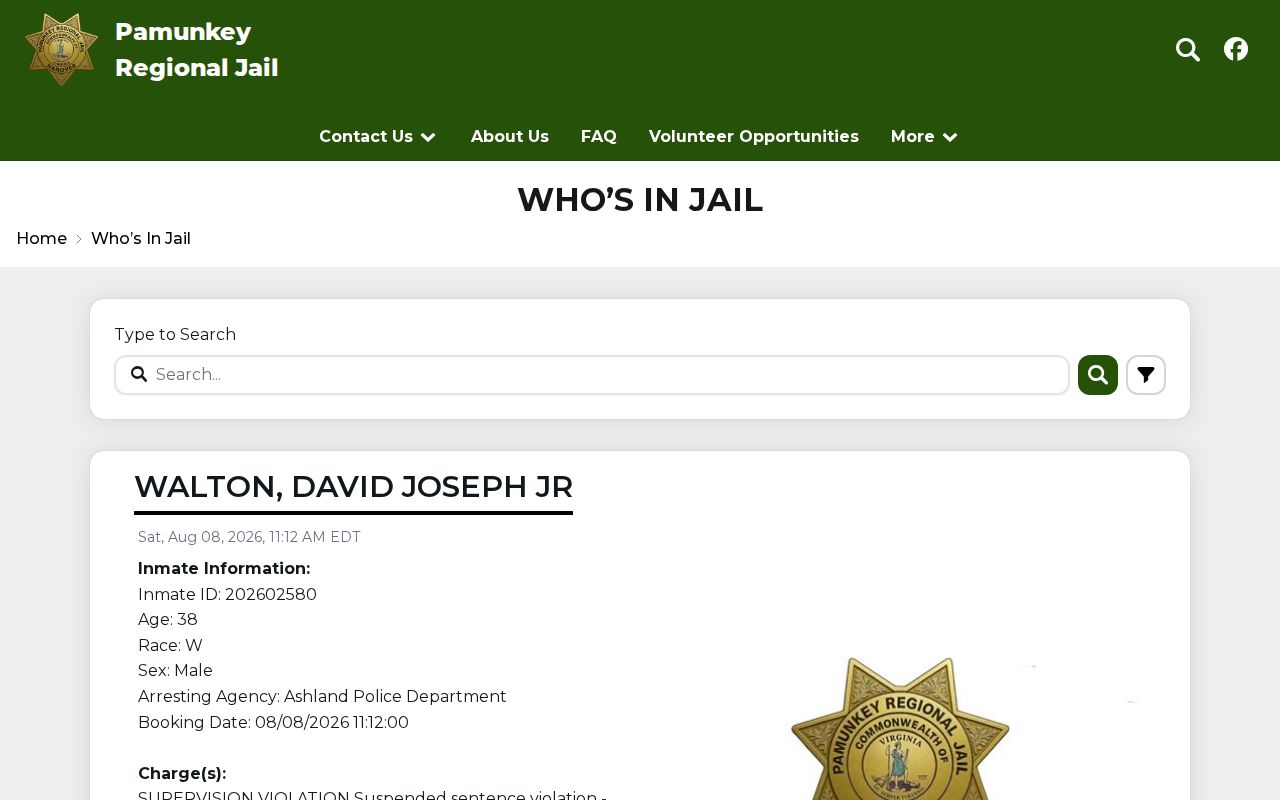
Searchers should retain the inmate ID and Powhatan arresting-agency field before a card changes. Those details help PRJ distinguish the correct record later, especially when people share a name.
This roster gap is the distinctive local issue. Powhatan’s arresting agency is local, but physical jail custody is regional. A request sent only to a supposed “Powhatan County Jail” misses the actual custodian because no such county-operated jail database exists.
Powhatan Release Records After Three Days
Once the event is older, the live roster becomes less useful. Lead with the court case and a written PRJ records request. Virginia court records may show the defendant, case number, charge, hearing events, disposition, sentence, and orders. A bond action, dismissal, time-served sentence, or transfer order can explain why the jail episode ended. Still, the docket may not show the precise hour PRJ completed the exit.
Virginia Jail VINE works best before a future event. It can provide a person match, custody status, and change notification through the offered channels. The official workflow says local-jail alerts stop after actual release, so VINE is not a lasting 72-hour archive. A missed alert or no-result does not prove a release. Pair any notification with the PRJ entry.
If the sentence or jail record points to state responsibility, use the VADOC Inmate and Supervisee Locator. It covers state custody and supervision, not an ordinary short PRJ booking. A new VADOC match after a PRJ exit signals a change of custodian. If a fully discharged person no longer appears, request the historical VADOC record rather than concluding that no record exists.
For one named person across several systems, the Powhatan County release search path follows the full custody chain. A 72-hour request has a different purpose: identifying all responsive exits within a defined local time span.
Powhatan Release Versus Current Custody
The meaning of a record depends on which agency holds it. A person on the PRJ roster is still listed in regional jail custody. A PRJ exit marked bond, recognizance, sentence complete, or another court-authorized community status may support release. A transfer notation means the regional booking ended, but confinement or custody continued elsewhere.
| Record result | What it supports | Next source |
|---|---|---|
| Current PRJ card | Present listing at the regional jail | PRJ Booking/Release |
| PRJ community-release entry | Exit time and stated release type | Powhatan court order |
| PRJ transfer entry | Departure from PRJ, not freedom | Named receiving agency |
| VADOC custody or supervisee result | State custody or community supervision | VADOC record and District 7 if applicable |
| Court disposition only | Legal outcome, not exact jail-door time | PRJ release entry |
A final check should reconcile the physical custody event and its legal basis. When the sources conflict, report the difference and contact the agencies that created the records. Choosing the more convenient date can turn a transfer or delayed exit into a false claim of release.
Note: A three-day span broadens the search window, but it never lowers the proof needed to distinguish community release from continued custody.